
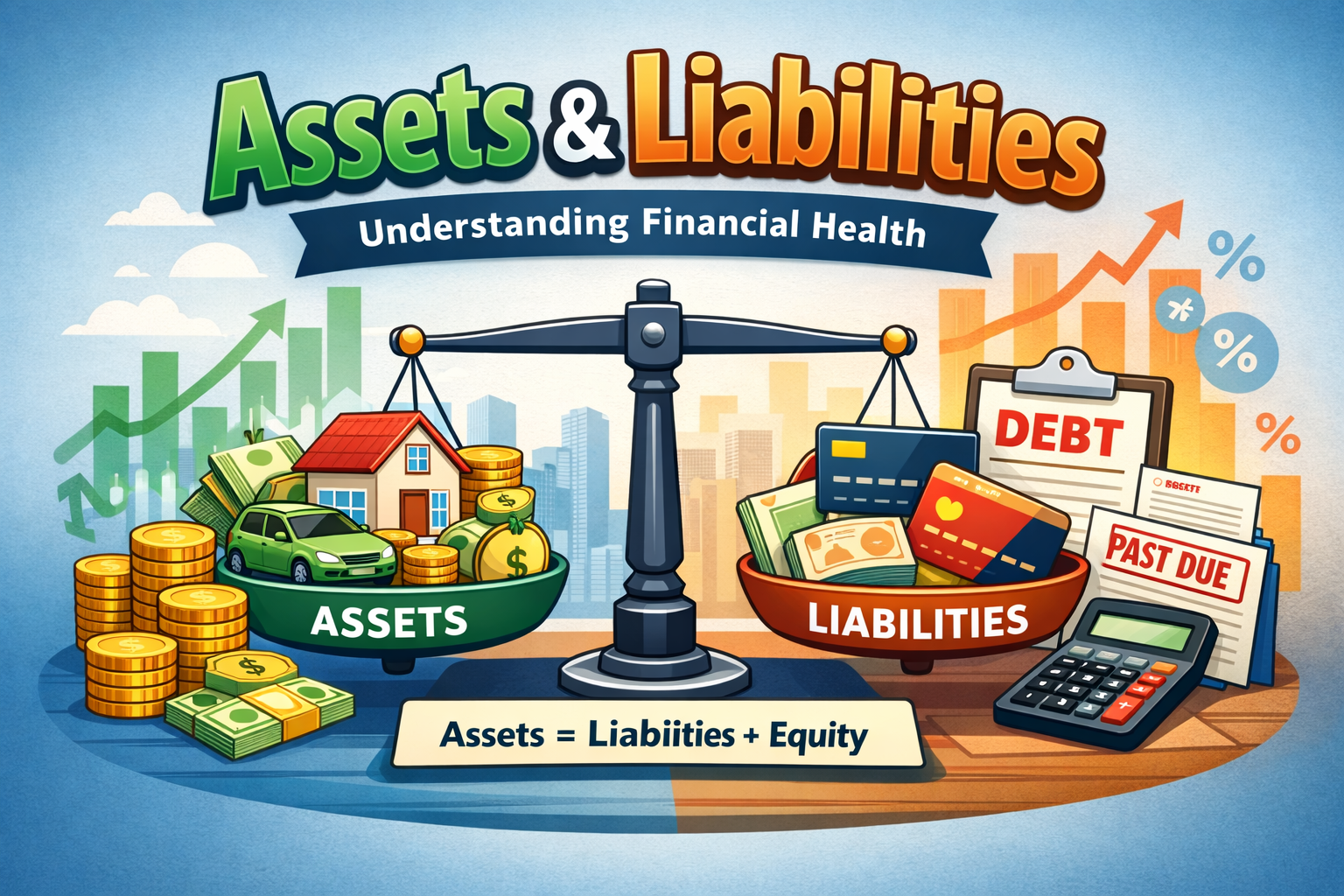
Understanding assets and liabilities is fundamental to managing personal finances, running a successful business, and making informed investment decisions. Whether you’re an individual planning your financial future or a business owner tracking performance, these two concepts form the backbone of financial literacy. In this comprehensive guide, we will explore what assets and liabilities are, their types, examples, differences, and how they impact your overall financial health.
What Are Assets?
Assets are anything of value that an individual or business owns or controls with the expectation that they will provide future economic benefits. In simple terms, assets put money in your pocket or have the potential to do so.
Key Characteristics of Assets:
- They have economic value.
- They can be converted into cash (in most cases).
- They are owned or controlled by an individual or entity.
- They provide future benefits.
Types of Assets
Assets can be classified into several categories based on their nature, usage, and liquidity.
1. Current Assets
Current assets are short-term assets that can be converted into cash within one year.
Examples:
- Cash and cash equivalents
- Accounts receivable
- Inventory
- Marketable securities
2. Non-Current (Fixed) Assets
These are long-term assets that are not expected to be converted into cash within a year.
Examples:
- Property
- Machinery
- Equipment
- Vehicles
3. Tangible Assets
These are physical assets that you can touch and see.
Examples:
- Land
- Buildings
- Inventory
4. Intangible Assets
These are non-physical assets but still hold value.
Examples:
- Patents
- Trademarks
- Goodwill
- Brand value
5. Financial Assets
These represent ownership of financial instruments.
Examples:
- Stocks
- Bonds
- Mutual funds
What Are Liabilities?
Liabilities are financial obligations or debts that an individual or business owes to others. These are amounts that must be paid in the future, often with interest.
Key Characteristics of Liabilities:
- They represent an obligation.
- They arise from past transactions.
- They require future payment or service.
Types of Liabilities
1. Current Liabilities
These are short-term obligations due within one year.
Examples:
- Accounts payable
- Short-term loans
- Credit card debt
- Accrued expenses
2. Non-Current (Long-Term) Liabilities
These are obligations that are due after one year.
Examples:
- Mortgages
- Long-term loans
- Bonds payable
3. Contingent Liabilities
These are potential liabilities that may arise depending on the outcome of a future event.
Examples:
- Lawsuits
- Warranty claims
Key Differences Between Assets and Liabilities
| Feature | Assets | Liabilities |
|---|---|---|
| Definition | Resources with economic value | Obligations or debts |
| Financial Impact | Increase wealth | Decrease wealth |
| Cash Flow | Generate income | Require payment |
| Examples | Cash, property, investments | Loans, credit card debt |
The Relationship Between Assets and Liabilities
Assets and liabilities are closely linked through the accounting equation:
Assets = Liabilities + Equity
This equation forms the basis of a balance sheet and shows how assets are financed—either through borrowing (liabilities) or ownership (equity).
Importance of Assets and Liabilities
1. Financial Planning
Understanding your assets and liabilities helps you assess your financial position and plan for the future.
2. Wealth Measurement
Your net worth is calculated as:
Net Worth = Assets – Liabilities
A positive net worth indicates financial stability, while a negative net worth suggests financial stress.
3. Investment Decisions
Knowing your asset base allows you to make smarter investment choices and diversify your portfolio.
4. Risk Management
Tracking liabilities helps you avoid excessive debt and manage financial risks effectively.
Examples of Assets and Liabilities in Real Life
Personal Finance Example
Assets:
- Savings account
- Car
- House
- Investments
Liabilities:
- Mortgage
- Car loan
- Credit card debt
Business Example
Assets:
- Equipment
- Inventory
- Cash reserves
- Accounts receivable
Liabilities:
- Bank loans
- Supplier payments
- Salaries payable
Good vs Bad Assets and Liabilities
Not all assets and liabilities are equal. Some contribute positively to financial growth, while others can be burdens.
Good Assets
- Generate income (e.g., rental property, dividend stocks)
- Appreciate over time
- Provide long-term benefits
Bad Assets
- Depreciate quickly (e.g., luxury items)
- Require high maintenance costs
Good Liabilities
- Help generate income or growth (e.g., business loan)
Bad Liabilities
- High-interest debts (e.g., credit cards)
- Do not contribute to income
How to Manage Assets and Liabilities Effectively
1. Track Your Finances
Maintain a record of all your assets and liabilities regularly.
2. Reduce High-Interest Debt
Focus on paying off liabilities with high interest rates first.
3. Invest in Income-Generating Assets
Prioritize assets that produce cash flow or appreciate over time.
4. Maintain a Healthy Balance
Avoid excessive borrowing and maintain a favorable asset-to-liability ratio.
5. Build an Emergency Fund
Keep liquid assets available for unexpected expenses.
Common Mistakes to Avoid
1. Ignoring Small Liabilities
Even small debts can accumulate and become a burden over time.
2. Overvaluing Assets
Be realistic about the value of your assets, especially in volatile markets.
3. Taking on Unnecessary Debt
Avoid liabilities that do not contribute to your financial growth.
4. Lack of Diversification
Relying on a single asset type can increase financial risk.
Role of Assets and Liabilities in Business Accounting
In business, assets and liabilities are recorded in the balance sheet, which provides a snapshot of the company’s financial position.
Balance Sheet Structure:
- Assets (what the company owns)
- Liabilities (what the company owes)
- Equity (owner’s investment)
This information is crucial for:
- Investors
- Creditors
- Management
Assets vs Liabilities in Investing
When investing, understanding assets and liabilities helps you evaluate risk and return.
- Investors prefer companies with strong asset bases and manageable liabilities.
- High liabilities may indicate financial risk.
- Strong assets can signal growth potential.
Why Assets Should Exceed Liabilities
Having more assets than liabilities indicates financial strength and stability. It means:
- You have a positive net worth
- You can cover your debts easily
- You are better prepared for emergencies
Practical Tips for Building Wealth
- Start saving early
- Invest consistently
- Avoid unnecessary debt
- Focus on long-term growth
- Reinvest your earnings
Conclusion
Assets and liabilities are the foundation of financial understanding. Assets represent what you own and can use to build wealth, while liabilities represent what you owe and must manage carefully. The key to financial success lies in maximizing your assets while minimizing your liabilities.
By maintaining a healthy balance between the two, you can achieve financial stability, grow your wealth, and secure your future. Whether you are managing personal finances or running a business, a clear understanding of assets and liabilities will empower you to make smarter financial decisions.
No responses yet