
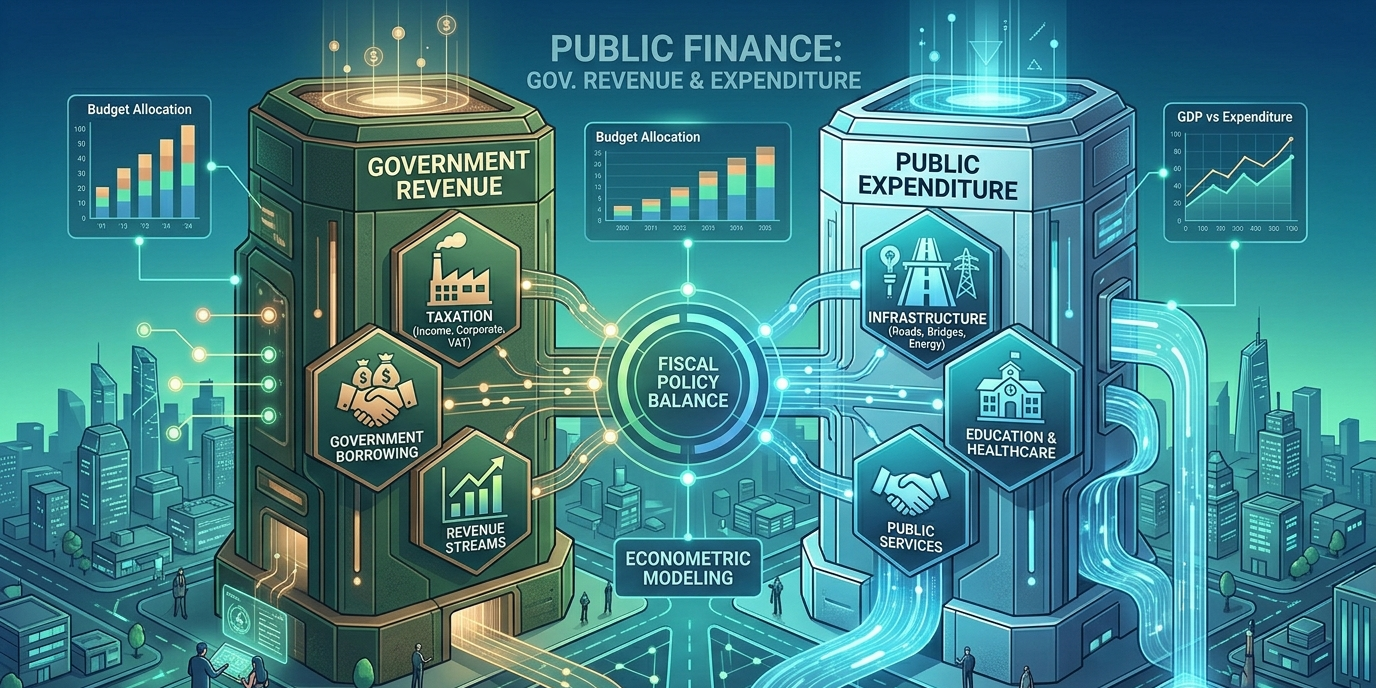
Ever wonder how that new highway got built, or why your local library stays open late? It’s not magic—it’s Public Finance.
While personal finance is about managing your own wallet, public finance is about how the government manages the “collective wallet” of the nation. It’s the study of how governments raise money, how they spend it, and the impact those decisions have on the economy and society.
The Three Pillars of Public Finance
To understand how the government operates, it helps to look at the three main functions defined by economists:
- Allocation: The government steps in to provide goods and services that the private market might not provide efficiently—think national defense, street lighting, or public parks.
- Distribution: This is about fairness. Through taxes and social programs, the government helps redistribute wealth to ensure a basic standard of living for all citizens.
- Stabilization: When the economy gets rocky (like during high inflation or a recession), public finance tools are used to keep things steady and encourage growth.
Where Does the Money Come From? (Revenue)
The government doesn’t have a “get rich quick” scheme; it relies on several key sources of income:
- Taxes: The biggest slice of the pie. This includes income tax, corporate tax, and sales tax (GST/VAT).
- Non-Tax Revenue: Fees for services (like passports), fines, and profits from state-owned enterprises.
- Public Debt: When spending exceeds revenue, the government borrows money by issuing bonds. While common, managing this debt is a delicate balancing act.
Where Does the Money Go? (Expenditure)
Public spending is a reflection of a country’s priorities. Typical categories include:
- Social Infrastructure: Education, healthcare, and housing.
- Physical Infrastructure: Roads, bridges, and energy grids.
- Administration: Paying for the police, the legal system, and government officials.
- Interest Payments: Paying back the “credit card” of public debt.
Why Should You Care?
Public finance isn’t just for economists in suits. It affects your daily life in real ways:
- Your Paycheck: Tax policies determine how much of your salary you take home.
- Your Opportunities: Government investment in education and tech determines the jobs of the future.
- The Cost of Living: Government spending and debt levels can influence inflation and interest rates.
The Bottom Line
At its heart, public finance is about choices. It’s the constant process of deciding how to use limited resources to meet the unlimited needs of a population. When done well, it creates a foundation for a thriving, stable society.
No responses yet